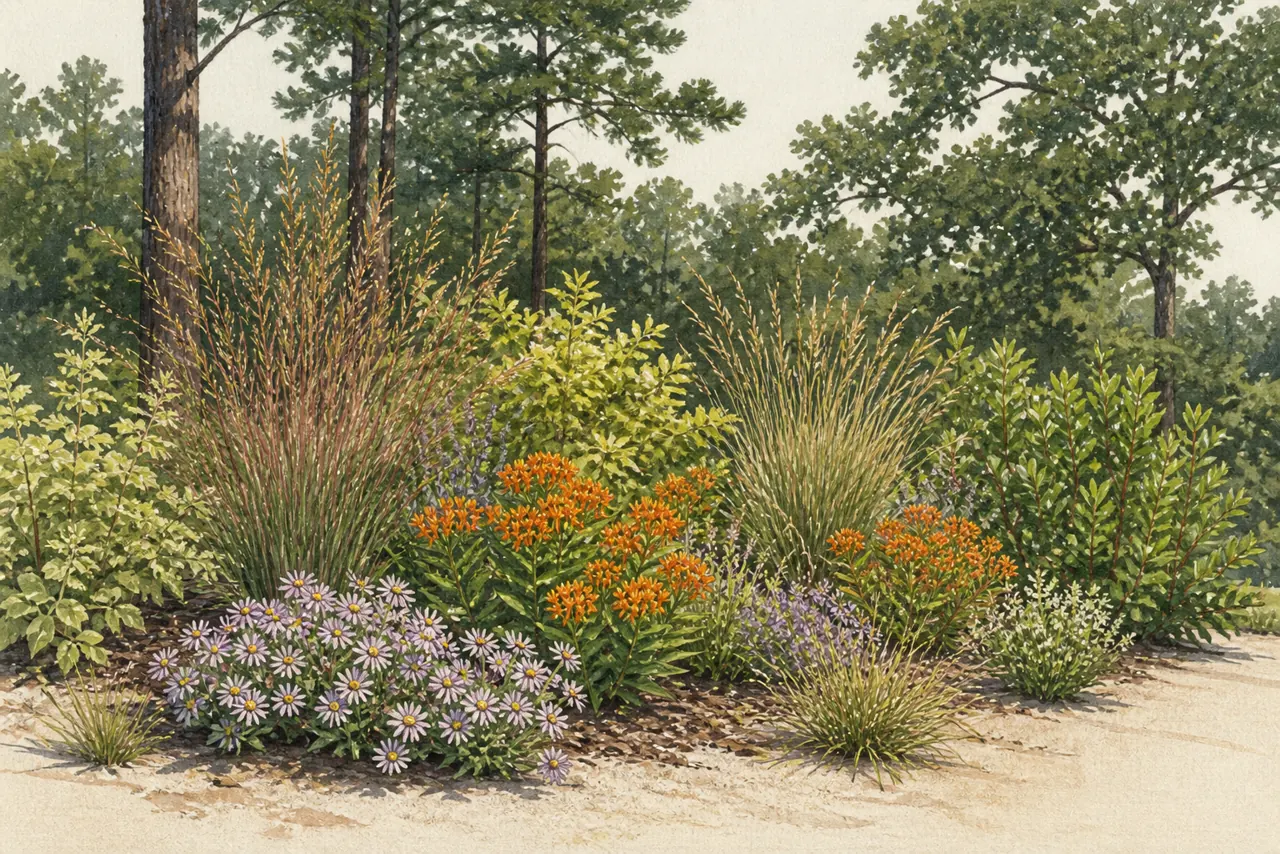
Respect the difference between upland sand and a wet hollow
Porous surface soil can drain quickly while a lower layer or high water table keeps another part of the property moist. Plant selection should follow that local hydrology. Little bluestem and butterfly weed belong in a sunny, well-drained upper zone; Virginia sweetspire belongs in a distinctly more moisture-retentive pocket.
Within the Pinelands, naturally acidic, low-nutrient soils support a specialized community. The Pinelands Commission advises testing soil and avoiding routine fertilizer and lime, which can disrupt those conditions and move through porous soil into groundwater.
Use a lean, legible planting pattern
Repeat little bluestem as the main texture, place two or three groups of butterfly weed between the grasses, and use one compatible low shrub as an anchor. Keep a plain mown or stone edge so the ecologically lean planting reads as deliberate rather than neglected.
Do not import woodland plants merely because they are native to New Jersey. The right regional label still has to match sun, soil chemistry, drainage, and salt exposure on your property.
- Dry sunny upper zone: bunchgrass, butterfly weed, and a low dry-site shrub.
- Sheltered part shade: locally appropriate heath-family or woodland plants after a soil test.
- Seasonally moist low zone: a separate moisture-tolerant palette, never mixed at random with dry-upland plants.
Water new plants without erasing the site
Even drought-tolerant plants need consistent moisture while their roots move beyond the nursery pot. Water deeply, then let the upper soil begin to dry. A thin organic surface layer can slow evaporation, but heavy imported compost changes nutrient and moisture conditions.
Near the coast or a salted road, watch for burned leaf margins and patchy dieback. Salt tolerance is a separate filter; use Rutgers resources and local extension advice before treating a general Coastal Plain list as a shorefront list.
The working plant palette
These roles are a starting framework. Confirm county-level nativity, provenance, mature width, and nursery availability before purchase.
A sun-loving bunchgrass for lean, well-drained ground with strong fall and winter presence.
Fits hot, well-drained sand once established and keeps a relatively compact form.
New Jersey tea
Ceanothus americanus
A dry-soil shrub with summer flowers; verify local provenance and allow for mature spread.
Bearberry
Arctostaphylos uva-ursi
A low evergreen option for acidic, well-drained sites within its local range.
Eastern prickly pear
Opuntia humifusa
Suitable only for the driest sunny pocket, away from paths and children’s play areas.
A separate choice for a lower medium-moisture zone—not for the driest upland sand.
A practical sequence
Locate the property in its regional context and obtain a soil test.
Mark dry upland, ordinary garden soil, and seasonally moist pockets.
Install small repeated groups without wholesale amendment of the native soil.
Water for establishment, then record which zones actually dry first.
- A Pinelands garden, a general Coastal Plain yard, and an oceanfront salt-exposed lot are different planting environments.
- Check local rules before altering drainage or vegetation in wetlands, dunes, buffers, or protected Pinelands areas.
- New Jersey Pinelands Commission — Landscaping & Backyard Habitat ↗
- Rutgers NJAES — Incorporating Native Plants in Your Residential Landscape ↗
- Rutgers NJAES — Invasive Plants and Native Alternatives ↗
Plant ranges and recommendations change as records improve. Read how we separate range, site fit, and design judgment in our sources and methodology.