Why it earns a place
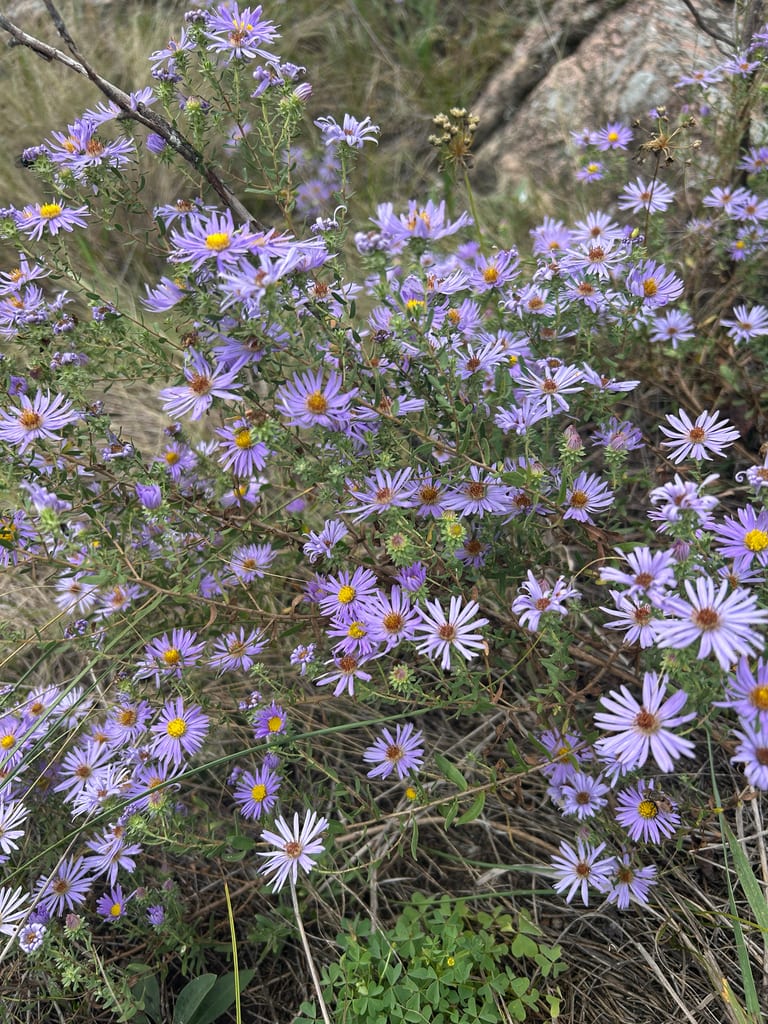
Late nectar supports migrating butterflies and bees preparing for winter. Aromatic Aster is most useful when its mature size and growth habit support the shape of the whole bed—not when it is added as a one-off token native.
Where it fits
This field card is intended for residential-scale planting in the U.S. Mid-Atlantic. Good uses include fall color, dry slopes, front-yard massing. Site conditions still vary within a ZIP code, so observe drainage and actual hours of direct sun before choosing a final location.
Planting pattern
Start with an odd-numbered group when space allows. Keep the mature width clear of paths, vents, doors, and visibility triangles. Repetition usually looks calmer than mixing one of every species.
First-year care
- Water deeply during establishment rather than giving frequent shallow sprinkles.
- Keep a small weed-free ring around each crown while roots establish.
- Do not fertilize automatically; match the plant to the site first.
- Leave healthy stems and seedheads through winter when they do not block access.
USDA PLANTS profile for Symphyotrichum oblongifolium ↗
Range data is a starting point, not a guarantee of local ecological suitability. See our sources and methodology.