Pair by site, not just by color
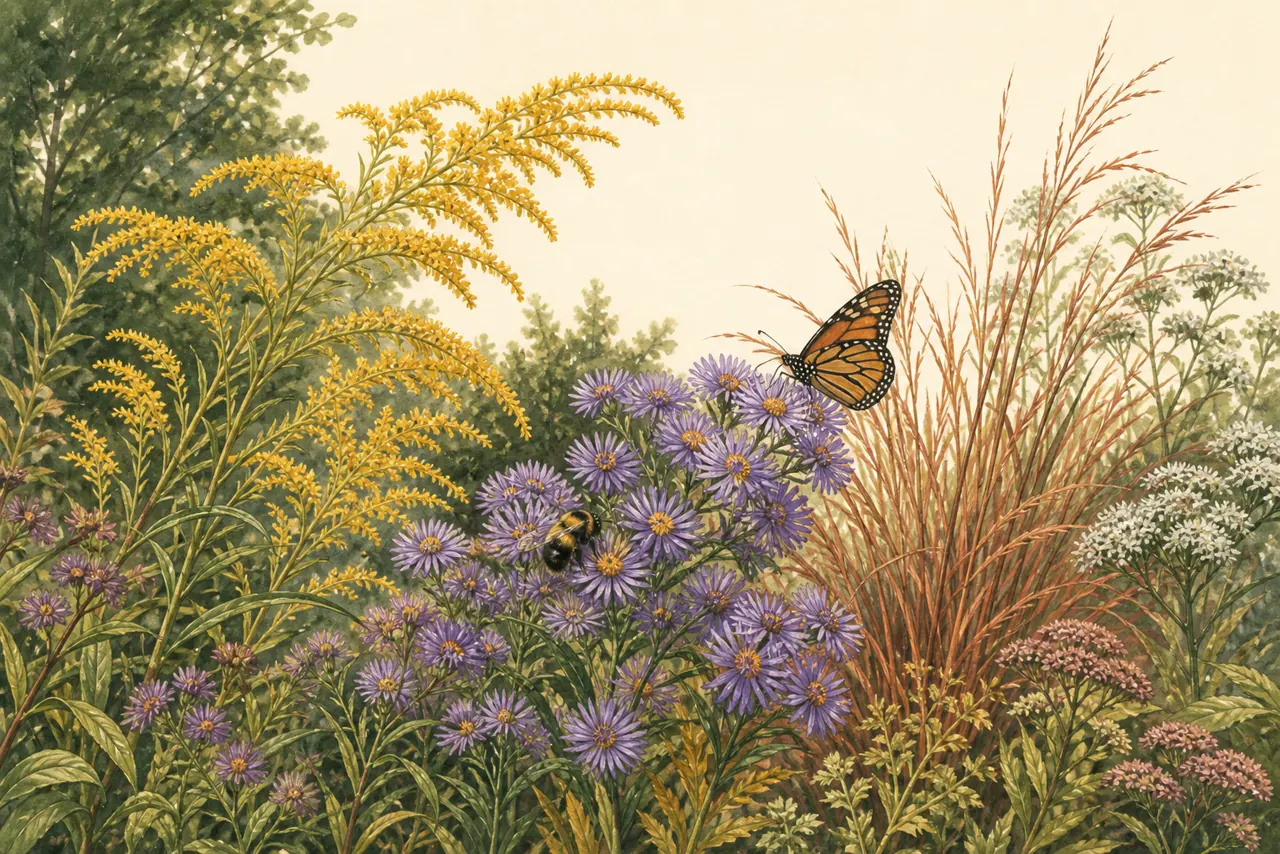
Purple asters and yellow goldenrods form a familiar fall combination, but the genera contain species for very different sites. Aromatic aster and gray goldenrod suit a sunny, drier bed. New England aster and ironweed need more moisture and more room. Zigzag goldenrod can move the fall sequence into partial shade.
Choose one compatible pair, then repeat both. A small bed with three aromatic asters, three to five gray goldenrods, and several little bluestem clumps will usually read more clearly than ten unrelated late bloomers.
Control height before it becomes a problem
Some late perennials can be reduced by cutting back roughly one-third of their height in June, which encourages a shorter, bushier plant and may delay bloom slightly. Use that technique selectively rather than shearing the entire habitat into one height.
Put the tallest species where they can lean into neighbors rather than across a path. In a very small front bed, favor naturally lower species or well-documented compact selections and keep a grass matrix around them.
- Dry sun: aromatic aster plus gray goldenrod and little bluestem.
- Medium-to-moist sun: New England aster plus ironweed with a sturdy grass.
- Dry-to-medium part shade: white wood aster or blue wood aster plus zigzag goldenrod and sedge.
Let fall plants work through winter
Seedheads feed birds and standing stems provide shelter. Leave healthy material where it remains safe and attractive, then cut in late winter before new growth. Keep some fallen leaves beneath plants instead of removing every piece of organic matter.
Late bloom is most useful as part of a full-season sequence. Add spring beardtongue or columbine and midsummer mountain mint or bergamot so the garden does not ask asters and goldenrods to carry the entire year.
The working plant palette
These roles are a starting framework. Confirm county-level nativity, provenance, mature width, and nursery availability before purchase.
A mounded late bloomer for dry-to-medium full sun and a front-of-bed position.
New England aster
Symphyotrichum novae-angliae
A larger purple-flowering choice for medium-to-moist soil where its height will fit.
Gray goldenrod
Solidago nemoralis
A shorter goldenrod for lean, dry, open ground.
Zigzag goldenrod
Solidago flexicaulis
A useful late flower for dry-to-medium woodland-edge conditions.
New York ironweed
Vernonia noveboracensis
A strong purple vertical for a sunny moist bed with room for its mature height.
Carries copper stems and seedheads after flowers fade.
A practical sequence
Plant fall species early enough to establish roots before their bloom season.
Reduce selected tall plants once if a shorter, bushier form is needed.
Observe overlap, pollinator use, lodging, and gaps in the sequence.
Cut back before new growth while retaining safe stems and leaf habitat as long as practical.
- Goldenrod pollen is not generally windborne like ragweed pollen, but any individual can have plant sensitivities.
- Tall species can obstruct paths and sight lines; mature dimensions and local provenance matter as much as flower color.
- Penn State Extension — Native Perennials for Fall ↗
- Penn State Extension — Native Plant Spotlights for Wildlife-Friendly Landscaping ↗
- DC DOEE — Plant a Pollinator Garden ↗
Plant ranges and recommendations change as records improve. Read how we separate range, site fit, and design judgment in our sources and methodology.