By Pocket Habitat · revised September 12, 2026
These are source-informed editorial layouts, not gardens we claim to have installed or field-tested. Coordinates describe this example; local conditions and nursery dimensions take priority.
Does your site fit?
A 10 × 5-foot bed with part sun, normally medium-to-moist soil and positive drainage away from buildings. This is planting for a damp garden edge, not a sized rain garden or a downspout-disconnection design.
The planting recipe
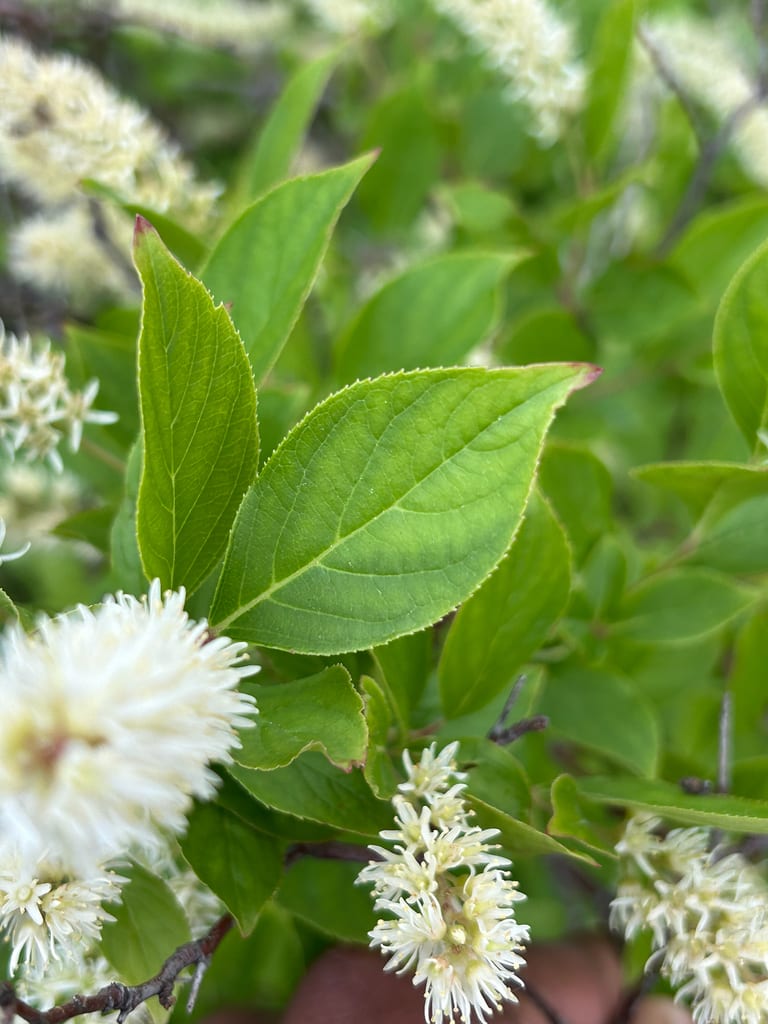
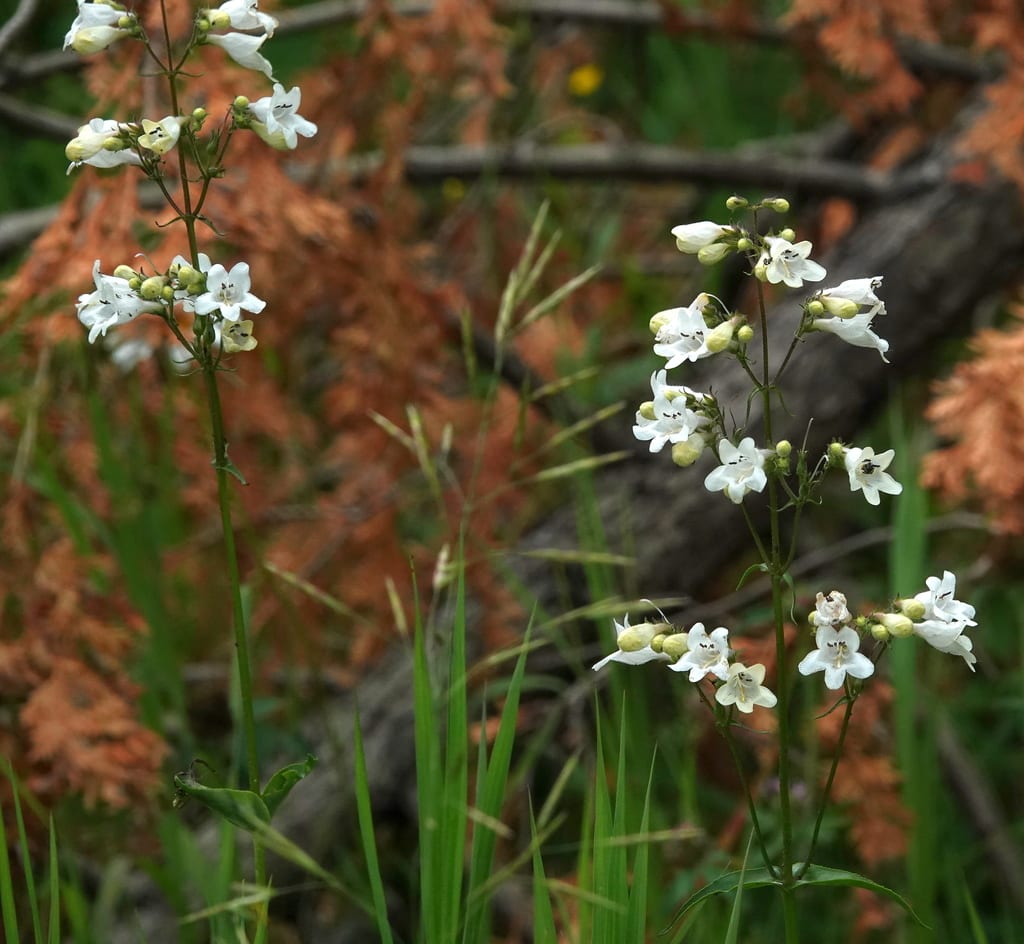
Reserve the left 5 × 5-foot half for one compact sweetspire and access to its spreading edge. Place four beardtongues on a 2.5-foot grid in the right half. Mountain mint and golden ragwort have been removed from this compact recipe to avoid asking several colony-forming plants to share an already constrained bed.
| Plant | Qty. | Role |
|---|---|---|
| Compact Virginia Sweetspire (such as Little Henry) | 1 | I · verified 2–3 ft-wide selection, not full-size species |
| Foxglove Beardtongue | 4 | P · early flowers on a 2.5 ft grid |
How to lay it out
- Observe the area through rain and the following dry period. Identify where excess water goes. If water approaches the foundation, stands persistently or carries soil away, resolve drainage before planting; do not excavate a basin from this sketch.
- Mark a 10 × 5-foot rectangle outside required building and utility access. Put the compact shrub at (2.5, 2.5) feet. Mark beardtongues at (6, 1.25), (8.5, 1.25), (6, 3.75) and (8.5, 3.75).
- Confirm the shrub's cultivar name and mature width before purchase. Keep its root flare at grade and perennial crowns at the existing soil level. Do not raise the bed against siding or direct a downspout at the new root balls.
- Water to settle the planting, then check moisture rather than assuming a damp-looking bed is wet inside each root ball. Keep mulch away from stems and leave a visible boundary so shrub suckers are easy to identify.
- After establishment, inspect the shrub's outer shoots each spring. Remove unwanted spread at the boundary before it becomes woody. Leave healthy perennial stems through winter where they do not interfere with the entry route.
Season by season
Check that runoff soaks in within roughly a day; persistent water needs professional assessment.
Check the shrub's spreading edge and keep the entry route clear.
Enjoy sweetspire color and leave the perennial stems standing until late winter.
If the planting does not behave as expected
The nursery supplies a larger sweetspire
Do not substitute it one-for-one. Keep the purchase on hold and either locate a documented compact selection or redesign the footprint.
Beardtongues lean toward brighter light
Recheck the bed's growing-season exposure. A damp corner beneath dense cover does not match this part-sun composition.
Water scours a channel through the bed
Stop treating the site as an ordinary planting bed. Obtain site-specific stormwater advice; adding more plants does not establish safe capacity or overflow routing.
Before purchasing
Open each plant field card, verify regional range, and ask for straight species or locally appropriate cultivars. Availability and local native status vary. If your site differs substantially, use the plant finder to rebuild the list around the actual conditions.
Read the related site-preparation guide before buying, or compare the other Garden Plans.
Sources and design decisions
The sources below support plant size and culture, not an endorsement or trial of this layout. Coordinates, quantities and access allowances are our editorial design decisions. Consult local guidance for your property.