By Pocket Habitat · revised September 12, 2026
These are source-informed editorial layouts, not gardens we claim to have installed or field-tested. Coordinates describe this example; local conditions and nursery dimensions take priority.
Does your site fit?
A 10 × 6-foot patch of leaf-filtered shade with dry-to-medium, draining soil. Place the rectangle beside the tree rather than centered on its trunk. Sedge supplies the low layer; columbine adds spring flowers without promising summer-long bloom.
The planting recipe
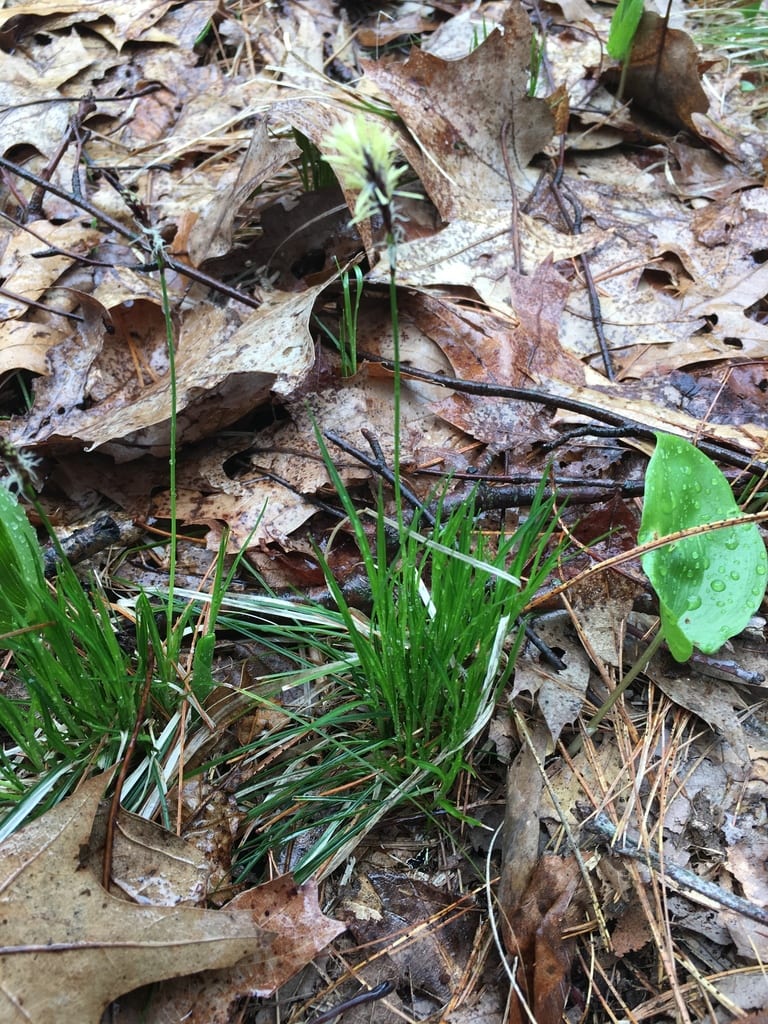
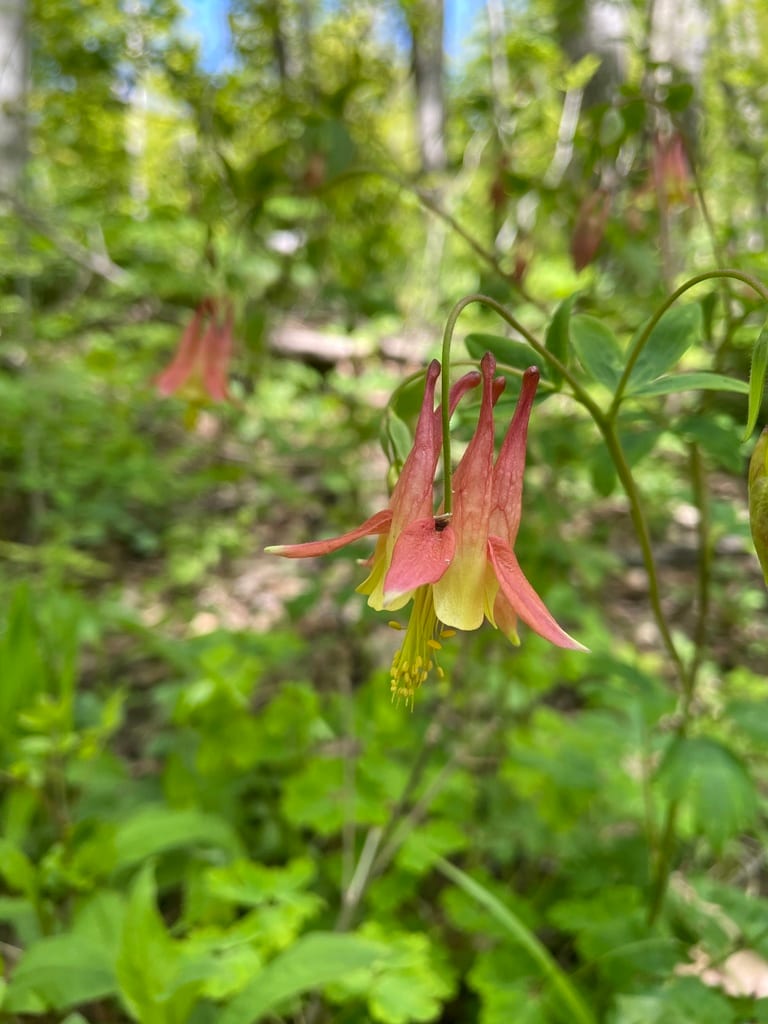
The 15 sedges use a 2-foot center grid with a 1-foot margin. This is a slow-fill arrangement: the ground layer is expected to spread, not cover the ground on installation day. Three columbines sit in grid gaps as an interplanted layer. Their foliage may overlap the sedge; reduce their number if your supplier lists a broad-growing selection.
| Plant | Qty. | Role |
|---|---|---|
| Pennsylvania Sedge | 15 | S · slow-filling ground layer |
| Eastern Red Columbine | 3 | C · spring color pockets |
How to lay it out
- Measure sunlight after the tree has leafed out. Mark a root-free test hole by hand before buying a full tray; an apparent bare patch is not proof that digging is harmless.
- Mark sedge columns 1, 3, 5, 7 and 9 feet from the left boundary, with rows 1, 3 and 5 feet from the near edge. Set columbine markers at (2, 2), (6, 2) and (8, 4). Shift or omit individual positions where roots intervene.
- Use small plugs and hand tools. Keep the existing soil grade and the tree's root flare exposed. Do not till, trench an edge through roots, or install a buried barrier to make the diagram exact.
- Water the new plugs individually and check them during dry weather: rainfall intercepted by leaves may not wet the root balls. Established tree roots continue to compete for water even after the first year.
- Retain a loose leaf layer between plants without burying their crowns. Remove weeds by hand while the sedge fills in. Keep only the columbine seedlings that leave access and breathing room around established plants.
Season by season
Remove damaged material only as needed; keep the soil covered and do not scalp the sedge.
Allow a few columbine seedlings to remain where they soften hard edges.
Check moisture beneath the canopy during dry spells, including after establishment; tree-root competition persists.
If the planting does not behave as expected
Bare soil between sedges
At 2-foot centers, early gaps are intentional. Protect the soil with loose leaves and weed it; do not assume an incomplete first-season carpet means failure.
Columbine foliage looks tired after flowering
Separate seasonal decline from dry root balls. Preserve the sedge layer, remove only damaged material as needed and avoid reflexively replacing every quiet patch.
The canopy becomes much denser
Recheck leaf-on light. Keep the sedge where it performs and reduce the flowering layer if it no longer flowers; do not prune the tree just to preserve this recipe.
Before purchasing
Open each plant field card, verify regional range, and ask for straight species or locally appropriate cultivars. Availability and local native status vary. If your site differs substantially, use the plant finder to rebuild the list around the actual conditions.
Read the related site-preparation guide before buying, or compare the other Garden Plans.
Sources and design decisions
The sources below support plant size and culture, not an endorsement or trial of this layout. Coordinates, quantities and access allowances are our editorial design decisions. Consult local guidance for your property.