First decide whether the plant rose or the soil disappeared
Iowa State Extension explains frost heave as repeated surface freezing and thawing lifting a perennial's crown and roots. Newly planted or shallow-rooted plants are especially vulnerable. Exposed roots can then dry out or suffer cold injury. This is a physical change in the plant's position, not simply brown foliage after a frost.
Compare what you see with an autumn photograph if you have one. A raised root ball after freeze-thaw weather is consistent with heaving; a channel leading from a downspout suggests a separate runoff problem. A hole or disturbed soil warrants checking for digging. These are observation prompts, not a diagnosis from one photograph. More than one problem can occur in the same bed.
Use a three-way decision at the edge of the bed
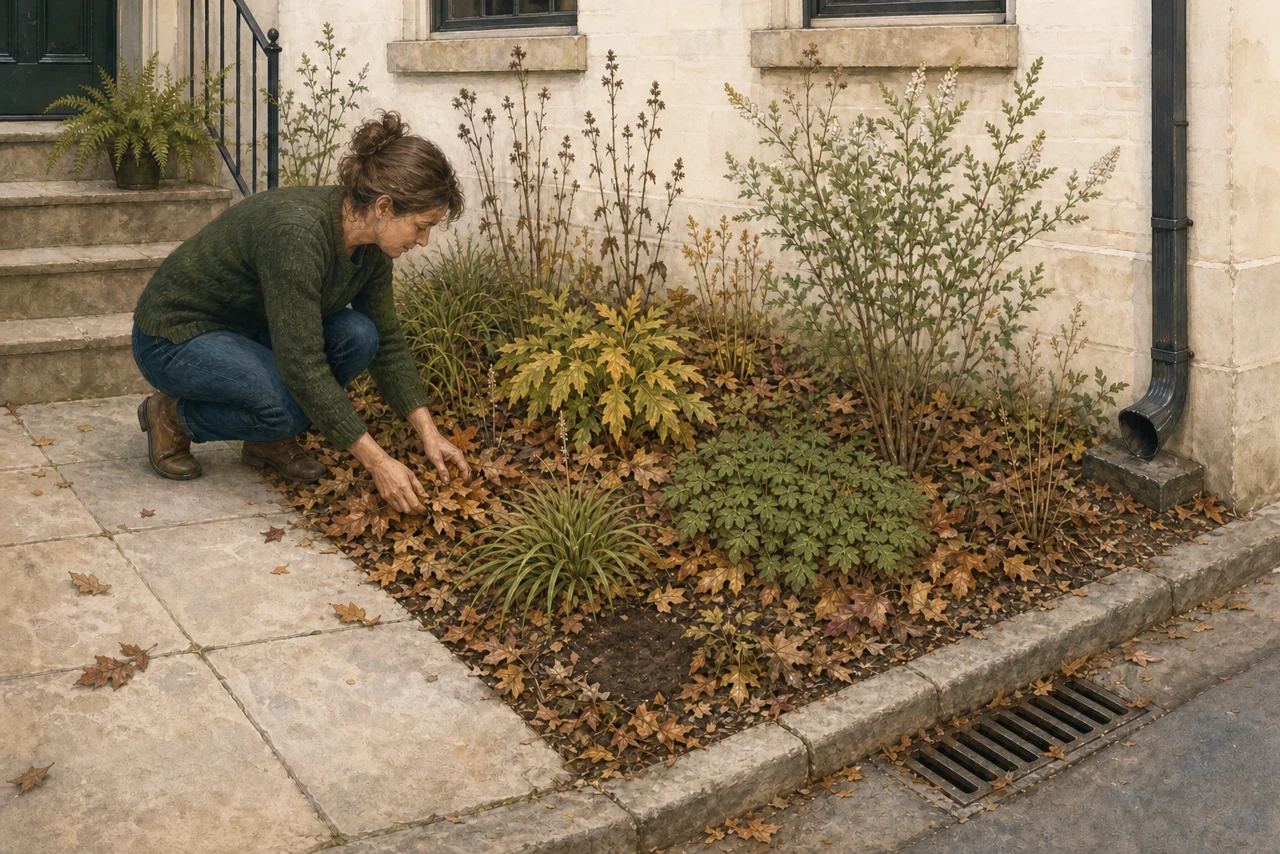
Inspect from a path where possible. Move only enough loose leaf litter to see the plant's base, using fingers near small stems rather than dragging rake tines through them. Leave the rest of the bed undisturbed. The following is a practical triage aid for a few newly planted perennials, not instructions for regrading a whole garden.
- Plant is still at its original level, with roots covered: leave it in place. Dead-looking top growth alone is not a reason to lift it.
- Plant is slightly raised and soil is fully thawed and soft: consider gentle resettling, then check that roots are covered without burying the crown.
- Ground is frozen, saturated, or the plant resists gentle movement: stop. Do not stamp, pry or hammer it down. Photograph exposed roots and ask local Extension or the nursery for advice if damage is substantial.
Resettle gently; do not turn the check into root damage
Iowa State's winter-care guidance recommends inspecting on warm, snow-free days and lightly tamping heaved perennials back into the soil. For a small plug, use gentle hand pressure around the root ball rather than pressing on the growing point. Stop if the soil is hard or the plant does not settle easily. This is not permission to force a large established clump downward.
Aim to restore the previous soil relationship, not to hide the entire plant. Keep the crown—the junction where shoots arise from the roots—at its appropriate planting level. A plant with broken roots, a soft crown or a largely detached root ball needs individual assessment rather than repeated pushing. Do not add fertilizer as an emergency response to displacement.
Use winter mulch for temperature moderation, not burial
University of Maryland Extension's November guidance recommends mulching perennials after the first hard freeze to moderate soil-temperature swings. Its perennial-care page describes a one-inch layer around plants after frost and warns against piling wood mulch on crowns. Check what is already present before adding anything; a new layer is not automatically needed every autumn.
Iowa State describes a thicker, temporary insulating cover for particularly heave-prone plants after the ground freezes, with excess removed as spring thaw begins. That is a different treatment from routine Maryland perennial mulching, not a reason to add several inches to every native bed. Do not transfer Iowa's calendar dates to a coastal Delaware garden or a Pennsylvania upland site. Ask for species-specific guidance if light surrounding cover has not been enough.
In a narrow bed, place usable loose material around the plants without pushing it onto paving or into a drain. A compact shrub rake can move leaves in the open gaps; finish by hand near crowns. Use material already on site when suitable. This article does not prescribe a universal mulch depth over living foliage, and it does not require stripping all habitat litter away in spring.
Keep a short record so the same pocket does not fail again
A useful notebook entry has five items: plant label, location, date, what changed, and action taken. For example: 'Front left plug; lifted after thaw; soil soft; gently resettled; photograph saved.' This is an example record, not an observation from a Pocket Habitat trial. Revisit after the next freeze-thaw spell and compare from the same angle rather than tugging on the plant to test it.
If several new plugs lift while older neighbors remain stable, include planting dates in your question to Extension. If one corner also collects runoff, include a wide photograph showing its route. Recurrent failure is a reason to review establishment timing and drainage before buying replacements. Use our planting-window guide for that decision; winter repair is not a recommendation to install more plugs in frozen ground.
Check site fit as well as winter damage
This is an example from our native plant library, not a ranking of frost-heave resistance. New roots and planting conditions matter; a native label does not diagnose the problem.
NC State describes a preference for well-drained soil and tolerance of clay when it drains well. If a new plant repeatedly lifts in a waterlogged pocket, do not assume that another layer of mulch will correct the site.
A practical sequence
On a snow-free thaw, compare root position, soil condition and evidence of runoff or digging.
Resettle only when soft soil allows it; stop before pressure damages the plant.
Record the affected pocket and inspect again after changing weather; review site fit if it recurs.
- This guide covers in-ground herbaceous perennials, not trees, bulbs, container overwintering or structural frost damage.
- Do not work frozen or waterlogged soil, bury living crowns, or assume every exposed root is caused by frost heave.
- Survival cannot be guaranteed after root exposure. Severe damage or an uncertain diagnosis warrants local advice.
Continue planning
- Choose a planting window: Plan establishment time before the next round of plug planting.
- Place fall leaves with care: Keep useful habitat litter without blocking access or drains.
- Use Plant Finder: Review light and moisture fit before replacing a struggling plant.
- Review Garden Plans: Keep a reachable edge so small plantings can be inspected without trampling them.
- University of Maryland Extension — November Gardening Tips and Tasks (regional mulch timing) ↗
- University of Maryland Extension — Perennials: Selection, Planting, and Care (mulch and crown protection) ↗
- Iowa State Extension — What is frost heaving, and how do I prevent it? (mechanism and temporary protection; not Mid-Atlantic dates) ↗
- Iowa State Extension — Winter Garden Tasks (inspection and gentle resettling) ↗
- NC State Extension — Penstemon digitalis (site and drainage requirements) ↗
Plant ranges and recommendations change as records improve. Read how we separate range, site fit, and design judgment in our sources and methodology.