First decide whether the signs fit powdery mildew
Powdery mildew commonly produces white or gray surface patches on leaves and sometimes on stems or buds. University of Maryland Extension describes distorted foliage, premature leaf loss and reduced growth in more serious infections. Powder alone is not a reliable measure of damage: look at how much healthy foliage remains and whether the plant continues to function.
Photograph a fresh affected leaf in place before removing it. Include an unaffected leaf and a wider view showing nearby vegetation. If the main problem is sudden wilting, a soft crown, unusual lesions or rapid death rather than surface patches, send those photographs to local Extension. This guide cannot diagnose a plant from its color alone.
Match the response to the damage
University of Minnesota Extension recommends tolerating infections that do not reduce growth or flowering. This general disease-management principle is useful here; it is not a prediction about your individual Mid-Atlantic bed. A few marked leaves after a good flowering season justify a different response from a clump that repeatedly loses most foliage early.
Use a simple record rather than an invented percentage threshold: date first noticed, whether new leaves remain healthy, whether flowers continue, and whether leaf drop is spreading. Compare the same stems on your next routine garden check. Repeated decline or uncertainty warrants local advice before removing healthy growth.
- Minor coating, normal growth: photograph and monitor; retain useful foliage and flowers.
- Increasing leaf loss or distorted new growth: inspect site conditions and ask Extension to confirm the problem if unclear.
- The same severe problem each year: plan a site adjustment or a better-matched selection rather than an annual emergency treatment.
Check the crowded-bed problem without scalping the garden
Maryland Extension recommends adequate light, spacing and air movement for susceptible plants. In a narrow rowhouse border, the original planting distance may still be visible at soil level while neighboring foliage forms a wall higher up. Check the canopy as well as the centers: a fence, shrub or taller perennial can turn yesterday's sunny opening into a shaded pocket.
For example, if two clumps now interlock across a path, mark the mature boundary you need to retain. Selective thinning may create room, but do not remove every leaf just to produce empty space. Save a larger division or relocation job for an appropriate planting window, with a prepared destination and enough space for the divisions. Division is a spacing tool, not a cure for infected leaves.
Do not confuse dry weather with protection from mildew
NC State specifically notes greater mildew susceptibility in water-stressed wild bergamot. Check soil beside the root ball before deciding to withhold water because leaves look diseased. If the root zone is dry, supply water there; if it is already wet, adding more water does not solve the diagnosis.
Powdery mildew differs from many leaf-spot diseases: it does not require a film of rain or dew on the leaf to infect. Minnesota Extension explains that wind carries its spores. Keeping leaves dry alone therefore cannot guarantee prevention. A watering wand can help reach the root zone in a tight bed, but it is not a mildew treatment.
Use regional trial results carefully when replacing plants
Mt. Cuba Center evaluated 40 Monarda species and cultivars in Delaware over three years, assessing features including foliage and disease resistance. That is more relevant to a Mid-Atlantic gardener than a catalog phrase such as trouble-free. It is still one trial, not a promise that a named plant will remain clean in every yard.
Read the individual entry, then compare mature height, spread, moisture requirements and the exact nursery label. If the current bed is too shaded or crowded, replacing one susceptible plant with a highly rated selection without changing the site may leave the underlying problem intact. Do not replace a locally appropriate species solely to chase an immaculate leaf.
A spray is not a reset button for damaged leaves
Minnesota Extension states that fungicides do not remove established infections; their role is protecting susceptible tissue in situations that justify treatment. This guide does not recommend a pesticide, home-mixed remedy or routine spray schedule. If severe, recurrent damage makes treatment worth considering, first confirm the diagnosis and obtain current local guidance for the actual plant and product.
Do not turn the rest of the border into collateral cleanup. Keep useful flowers and healthy structure where possible, and follow diagnosis-specific advice for diseased material. A tidier edge and a more suitable planting arrangement may be a better long-term change than repeatedly stripping the entire bed whenever a white patch appears.
Which bee balm are you assessing?
Use the actual species or cultivar name when comparing disease reports. A common name alone is not enough to choose a replacement.
NC State describes better performance in full sun and notes that water stress and crowded, poorly ventilated conditions can increase mildew problems. Resistance is not immunity.
Named bee balm selections
Monarda species and hybrids
Mt. Cuba's Delaware trial compared species and cultivars. Its results help screen replacements, but a hybrid's rating does not establish the performance of an unnamed wild bergamot seedling.
A practical sequence
Record the plant label, coating, leaf retention and flowering before pruning or moving anything.
Compare actual light, canopy crowding and root-zone moisture; address the condition you find, not an assumed cause.
Use repeated damage and a confirmed diagnosis to decide whether selective thinning, relocation or a different selection is justified.
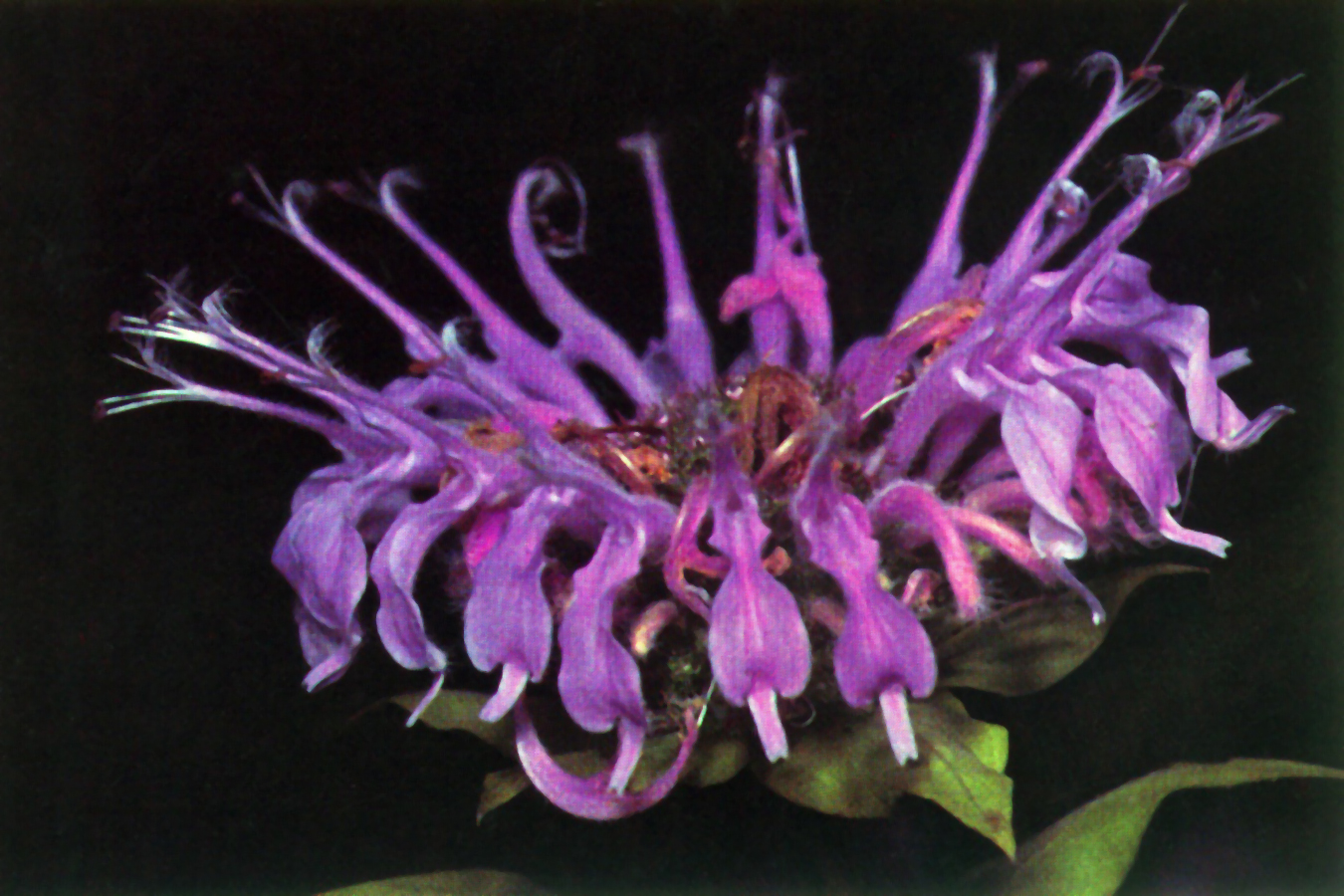
- A flowering-plant photograph is not a disease-identification image. Use the diagnostic photographs in the linked Extension resources for symptom comparison.
- Do not assume all plants called bee balm share the same native range, moisture needs or disease resistance.
- Avoid drastic late-season pruning solely to erase cosmetic marks. Ask for diagnosis-specific guidance if substantial tissue is dying.
Continue planning
- Read the wild bergamot field card: Check the species and its role before changing the planting.
- Plan division when crowding is the problem: Choose a receiving site and a suitable window rather than splitting a stressed clump impulsively.
- Measure actual sunlight: Check whether the canopy has changed the bed's exposure.
- Use Plant Finder: Filter alternatives by light and moisture; confirm disease resistance separately.
- Compare Garden Plans: Use mature-space assumptions and access needs, not pot size, to judge what fits.
- University of Maryland Extension — Powdery Mildew Disease on Flowers ↗
- University of Minnesota Extension — Powdery mildew in the flower garden (general disease biology and management) ↗
- NC State Extension — Monarda fistulosa ↗
- Mt. Cuba Center — Monarda for the Mid-Atlantic Region, 2014–2016 trial ↗
Plant ranges and recommendations change as records improve. Read how we separate range, site fit, and design judgment in our sources and methodology.