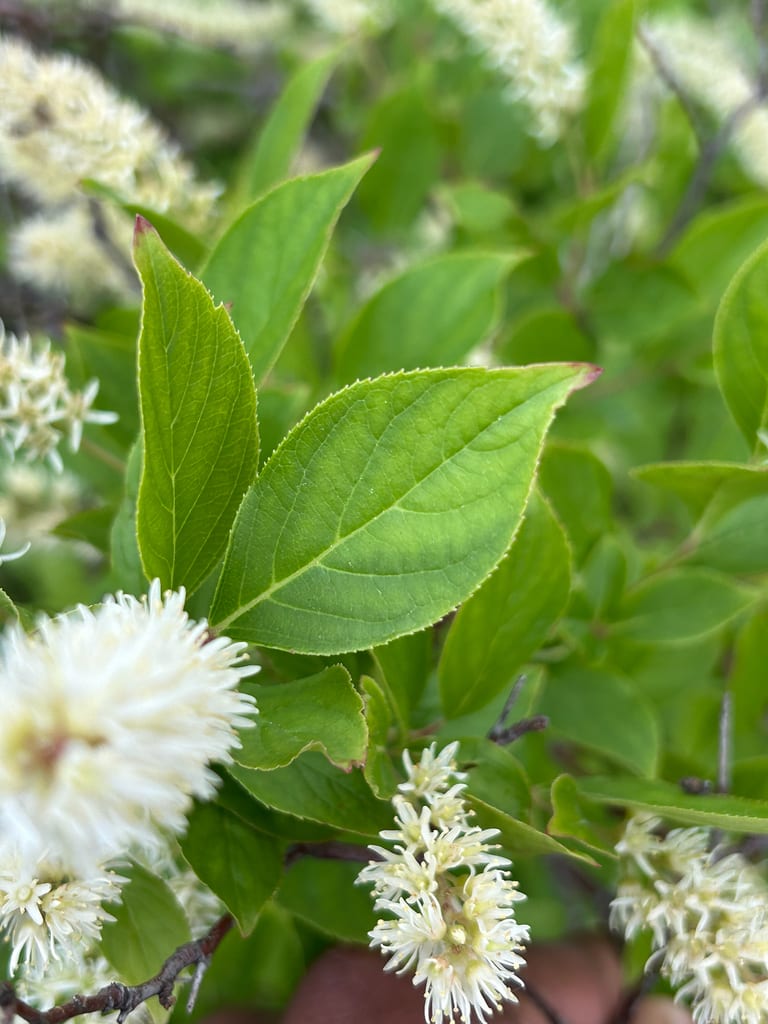
Confirm the problem before fencing the bed
University of Maryland Extension describes rabbit browsing as relatively clean, angled cuts, in contrast with the torn edges often left by deer. Winter bark damage and tracks can add context. Photograph the cut end, the whole plant and the surrounding ground; uncertain cases can go to Extension for identification. Minor browsing does not automatically require intervention.
Keep a short record for the plants you are worried about: date, plant, height of fresh damage and whether it appeared before or after snow. An old scar is not evidence that last night's barrier failed. In a small planting, marking the photographed branch on a sketch makes the next inspection much more useful than trying to remember which tips were already missing.
Choose one enclosure you can reach and maintain
For one shrub beside a path, sketch a freestanding enclosure around the lower branches. For several closely spaced shrubs, compare that with a single bed perimeter. The better option is the one that leaves a safe walking route and lets you inspect the ground edge without trampling neighboring plants. Do not attach the wire tightly to living stems.
An illustrative layout: a shrub occupies the rear of a narrow foundation bed, while the front edge is needed for access. Place temporary markers around the proposed enclosure and walk the route before cutting wire. If the barrier crowds the route, do not solve the problem by tying branches into a tight bundle. Rethink the boundary or ask for site-specific advice. This is a planning exercise, not a tested installation.
Size for branches and snow, not just bare-ground height
Maryland's rabbit fact sheet discusses guards at least three feet high and garden fencing three to four feet tall. Minnesota Extension adds an important winter check: protection should reach 18–24 inches above the anticipated snow line. These are not interchangeable measurements. A nominal three-foot guard can lose much of its effective height when a plowed snowbank builds beside it.
Minnesota recommends quarter-inch hardware cloth for trunk protection and hardware-cloth fencing around shrub beds, enclosing low branches as well as stems. It also emphasizes closing ground-level gaps and checking that rabbits are not trapped inside. Use these barrier principles here, not Minnesota's winter calendar as a Mid-Atlantic installation date.
Write down three dimensions before shopping: the enclosure footprint, the height above expected snow, and the material needed for secure seams and the ground edge. The buried portion does not count toward the above-ground height. A preformed guard is only useful if those dimensions fit the actual plant and site; a product name such as 'tree protector' is not enough.
Make the bottom edge and maintenance access deliberate
The regional Maryland guidance describes a buried, outward-facing fence edge for garden exclusion; Minnesota also calls for a buried lower edge and no crawl-under gaps. Check the linked installation instructions for the barrier type you choose. Do not improvise a trench through established woody roots, irrigation or uncertain buried services. Where installation would damage the planting, get help choosing another arrangement.
Use supports that keep mesh upright without leaning on branches. Plan a seam you can reopen for maintenance, then close it securely without a rabbit-sized gap. Wear gloves and eye protection when cutting or handling wire; turn or cover sharp cut ends and keep them away from the walking side. Do not leave loose loops or sagging netting around the plant.
Before closing the enclosure, inspect the entire interior from outside. If you find wildlife or a nest, stop rather than sealing it in or attempting to handle it. The aim is to exclude browsing from a selected plant, not to catch animals. A cage whose interior cannot be checked is a poor fit for a small garden you intend to manage by hand.
Inspect after weather changes and at spring growth
Add a barrier check to your normal garden walk and repeat it after snow, strong wind or maintenance nearby. Look for a lifted bottom edge, a shifted support, branch contact and a snow ramp. Compare new photographs with the original record. If damage continues, inspect how the animal could reach the plant before buying a repellent or replacing the shrub.
As growth resumes, make sure stems are not pressing into wire and decide whether protection is still needed. Re-size or remove an enclosure that has become too tight; do not leave forgotten ties to constrict new growth. Keep reusable materials labeled with the plant and dimensions, so next autumn's decision starts with what actually happened on your site.
- New cuts above the barrier after snow: recheck effective height and snow placement.
- Damage inside an apparently closed cage: inspect gaps and confirm the animal identification.
- Bark stripped around a stem: photograph the extent and seek Extension advice; a new barrier cannot undo existing injury.
Keep the habitat goal and the protection goal separate
A native garden can support wildlife while protecting a newly planted shrub. Start with targeted protection where the damage matters rather than clearing every leaf and standing stem from the whole property. Review our leaf-management guide when deciding where material can remain without blocking inspection or access.
Maryland Extension cautions that no plant is completely rabbit-proof. A deer-resistant label does not establish rabbit resistance. This guide therefore focuses on observation and physical exclusion, not a replacement shopping list, a pesticide recipe or a promise that a particular shrub will never be eaten.
A native shrub example, not a rabbit-resistance guarantee
Use the specimen's real size and your observations to decide whether protection is useful. This guide does not rank native shrubs by rabbit preference.
NC State describes arching branches and root suckering, with flowers on the previous season's wood. Enclose the existing branch footprint rather than squeezing it into a trunk-sized sleeve or pruning it to fit. This is a sizing example, not a claim that sweetspire is unusually susceptible to rabbits.
A practical sequence
Record fresh damage and confirm whether rabbits are the likely cause.
Plan an enclosure for the branches, ground edge, snow and human access—not only the trunk.
Inspect after weather changes and adjust before new growth presses into the mesh.
- This is nonlethal browsing protection for small ornamental shrub plantings, not trapping guidance or a deer-exclusion design.
- Snow depth, animal pressure and site layout vary across the Mid-Atlantic. Barrier dimensions must fit local conditions.
- No personally tested cage, product performance or guaranteed plant recovery is claimed.
Continue planning
- Check the separate deer-browsing guide: Do not substitute a short rabbit enclosure for a deer-management plan.
- Plan where autumn leaves can stay: Retain useful habitat without hiding access or inspection points.
- Review Garden Plans: Keep plant spacing and winter maintenance access in the same drawing.
- Use Plant Finder: Check site conditions and mature size before replacing a damaged plant.
- University of Maryland Extension — Eastern Cottontail Rabbits in Gardens and Home Landscapes (regional damage clues and exclusion) ↗
- University of Minnesota Extension — Protecting trees and shrubs in winter (mesh, snow-line clearance and inspection) ↗
- NC State Extension Plant Toolbox — Itea virginica (branching, suckering and flowering wood) ↗
Plant ranges and recommendations change as records improve. Read how we separate range, site fit, and design judgment in our sources and methodology.