Choose the lab first, then make a sampling plan
Maryland Extension's soil-testing directory links regional laboratories; Maryland itself does not operate a public soil-testing laboratory. Read the selected lab's current home-garden instructions before collecting. Confirm the test package, required amount, packaging, submission form and fee. A container filled on impulse may not meet that lab's requirements.
For a small border, make a simple sketch and assign sample IDs such as FRONT-A and WET-B. Use the same IDs on the bag, form and sketch. Keep the lab confirmation and a photograph of the completed form together so an ambiguous result can be traced back to a real place, not just to 'the garden.'
One small garden can contain more than one sampling area
Consider an illustrative 4 × 8 ft bed with a downspout wetting one corner and imported topsoil at the other end. This is a planning example, not a Pocket Habitat trial. A single blended result would erase which soil came from which condition. Decide what area each sample is meant to represent before deciding how many bags to send.
Keep visibly different or differently managed areas separate, following the lab's instructions. If your budget covers only one sample, choose the area tied to your immediate decision and label its limits; do not describe it as a whole-yard baseline. Ask the lab whether a small unusual patch warrants its own sample and which comparison would be useful.
Collect a composite sample, not a scoop from one planting hole
As general garden-bed guidance, Maryland Extension recommends combining 10–12 subsamples taken 6–8 inches deep. The receiving laboratory's instructions take priority. Use a clean tool and bucket, collect consistently across the defined area, and exclude surface litter, stones and plant debris. Mix thoroughly, then package the amount requested by the lab. Do not mail waterlogged soil.
In an established narrow bed, plan the sampling points before putting a tool between plants. Do not force a probe through woody roots or into a location with uncertain buried services. If the requested depth cannot be reached safely, stop and ask the laboratory how to handle that limitation; an unrecorded shallow sample is not an equivalent substitute.
A clean tool and suitable container you already own may be enough. New equipment is optional. Check the lab's tool and container requirements before buying anything, especially if requesting trace-element testing. Between sample areas, clean the equipment and start with an empty container so FRONT-A does not become part of WET-B.
Tell the lab what you are growing
On the submission form, identify an ornamental native perennial bed rather than choosing a lawn or vegetable category for convenience. Attach the plant list when possible. If the form offers only broad categories, ask which one is appropriate and how to interpret its recommendations for the species you actually have.
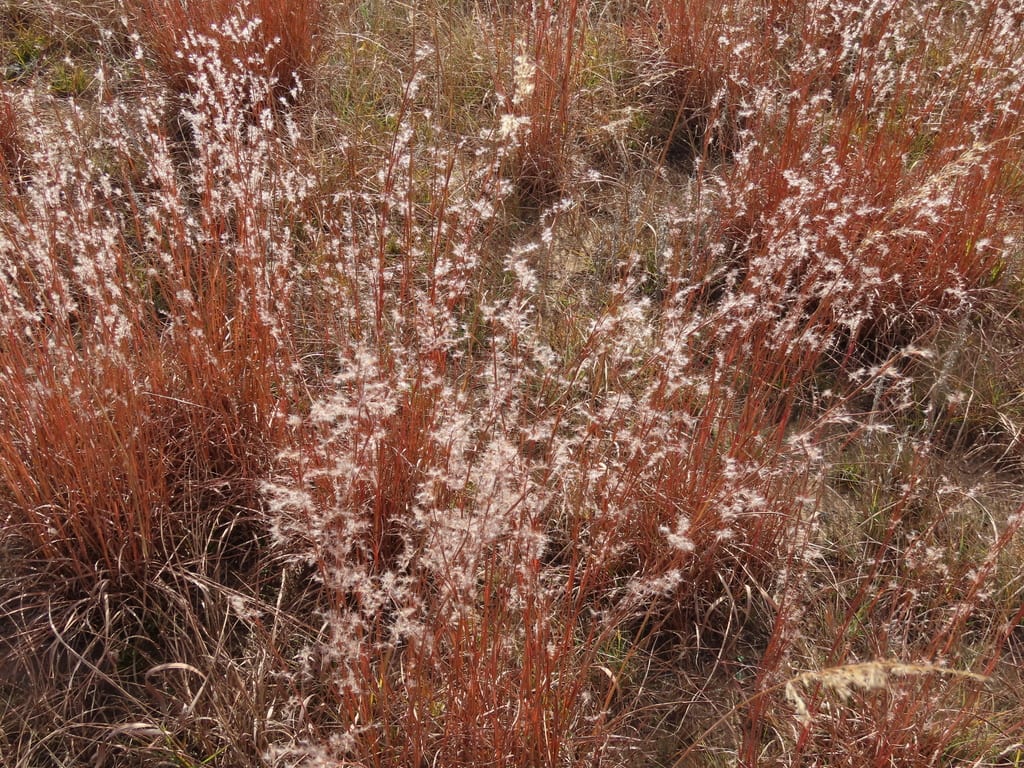
Keep a short companion note: 'Little bluestem in FRONT-A; afternoon shade; standing water noticed after rain; no fertilizer added this season.' The details here are an example of record-keeping, not a diagnosis. A sample number plus a plant name and site observations gives an adviser a more useful starting point than 'yellow leaves—what should I buy?'
Read the result as a decision sheet
Maryland Extension explains that an optimal or excessive nutrient reading is not a reason to add more of that nutrient. Soil pH affects nutrient availability, and plant preferences differ. Do not chase a universal pH of 7 or interpret every value as a target that must be increased. Review any lime or fertilizer recommendation in the context of the selected plant category.
Mark three items on your copy: what is actually low, which recommendation applies to your plants, and what still needs clarification. Keep the report's units intact. A rate per 1,000 square feet is not the amount for a 32-square-foot bed, and pounds of a nutrient are not automatically pounds of a bagged product. Ask Extension to check the conversion before purchasing or applying an amendment if the distinction is unclear.
- Nutrients adequate, plants still struggling: investigate light, water, roots and other causes rather than adding a general-purpose feed.
- A recommendation seems mismatched to the planting: send the full report, plant list and photographs to your local Extension office.
- No amendment is indicated: file the baseline and continue observing; taking no action is a valid result.
Know what the test does not answer
A routine fertility test is not a diagnosis of poor drainage, plant disease or every possible contaminant. If land-use history raises a contamination concern, ask the laboratory about an appropriate separate test before sampling. Do not treat a normal fertility result as a safety certificate.
Maryland's fertilizer guidance notes that most established perennials do not need supplemental fertilizer and that feeding does not fix an unsuitable site, pests or disease. Excess fertilizer can create problems rather than solve them. Use our sun-measuring and clay-soil guides for those separate investigations, then return to the planting plan with the evidence you have gathered.
A plant to check against the site, not a fertilizer prescription
Native plants do not all share one ideal soil. Use the actual species on your planting list when asking the laboratory or Extension for help.
NC State Extension describes full sun and well-drained, dry-to-medium soil as its best conditions, and notes tolerance of infertile soil. A low-fertility reading alone does not show that fertilizer is the missing ingredient in a shaded, wet planting.
A practical sequence
Choose the lab and the decision; sketch and label each distinct sampling area.
Follow that lab's depth, mixing, packaging and submission directions without damaging established roots.
Match the report to the actual plants and bed area before deciding whether any amendment is needed.
- This guide concerns in-ground ornamental beds, not potting mixes, vegetable food-safety testing or a universal fertilizer schedule.
- The linked laboratory's current instructions override the general sampling example here.
- No sample result, fertilizer rate or personal field-test outcome is invented for this guide.
Continue planning
- Investigate clay and drainage: Keep a drainage problem separate from a nutrient question.
- Measure the light reaching the bed: Replace a sun assumption with observations before changing the soil.
- Review Garden Plans: Compare the sampled bed's conditions with the plants in a small-space plan.
- Use Plant Finder: Match plants to the light and moisture you actually have.
- University of Maryland Extension — Soil Testing and Soil Testing Labs (lab selection, sampling and limits) ↗
- University of Maryland Extension — Understanding Your Soil Test Report (nutrient sufficiency, pH and units) ↗
- University of Maryland Extension — Garden Fertilizer Basics (when feeding does not help) ↗
- NC State Extension Plant Toolbox — Schizachyrium scoparium (site requirements and infertility tolerance) ↗
Plant ranges and recommendations change as records improve. Read how we separate range, site fit, and design judgment in our sources and methodology.