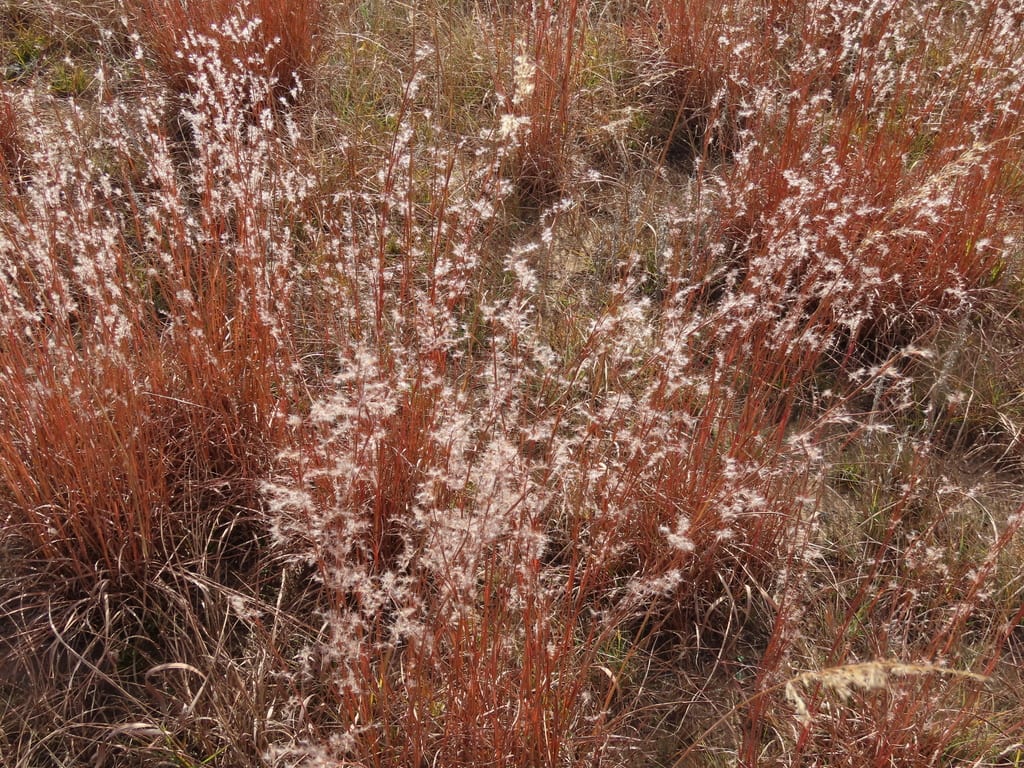
Autumn color is a reason to pause, not a reason to mow
University of Maryland Extension describes little bluestem's rusty fall color, silvery seed and winter shelter value. It notes that snow can bend clumps into shelter for overwintering birds and that the grass can stand up again after the snow melts. A bent winter clump is therefore not necessarily dead or in need of immediate removal.
In a small bed, distinguish appearance from function. If stems remain inside the planting and access is clear, retain them. If only the sidewalk edge is obstructed, deal with that edge rather than making every clump match. This is a practical space-management choice, not a claim that every stem must stay untouched all winter.
Why the sources do not give one universal cutting date
NC State recommends cutting old growth in late winter or early spring. Maryland's little bluestem profile allows trimming garden specimens in late spring if desired. Those calendar descriptions differ, so do not turn either into a fixed March appointment for every Mid-Atlantic garden.
Inspect the plant as the weather changes. For a full cutback, work before new foliage becomes entangled in the old stems. A warm urban courtyard may reach that point before a colder upland site. If green shoots are already growing through the clump, do not run shears blindly across both old and new growth; use selective work or leave it rather than cutting off the fresh leaves for tidiness.
Choose between leaving, selective cutting and a full cutback
Use three questions: Is there an access problem now? Is this old dormant growth? Can I clearly see and avoid new shoots? The following is an editorial decision aid for a few garden clumps, not a meadow mowing prescription.
- Fall or winter, no obstruction: leave the clump standing and inspect after storms.
- A few stems cross a walking route: remove only what is needed to restore safe access; do not leave cut stems on the paving.
- Spring transition, old growth and no emerging leaves in the cutting zone: a whole-clump cutback is an option.
- Fresh foliage mixed through the old stems: avoid a uniform low cut. Work selectively where you can see clearly, or postpone cosmetic cleanup.
Make a controlled cut in a tight bed
Illinois Extension gives a general ornamental-grass cutback height of about four to six inches before spring growth resumes. That is a useful working reference, not a little-bluestem-specific height trial. Protect the crown and any emerging growth instead of chasing an exact measurement. NC State also advises keeping mulch away from the crown.
Wear gloves and eye protection, keep your supporting hand clear of the blades, and use clean, sharp hand tools you can control between neighboring plants. Cut manageable sections rather than forcing one large bundle through the tool. For a few stems, hand pruners may suffice; use suitable garden shears if the stems exceed their capacity. Never reach blindly into the clump or use a string trimmer against the crown.
Decide where the cut material will go first
Illinois Extension advises retaining some undisturbed debris and placing cut stalks out of the way so overwintering insects can emerge. If you have a suitable sheltered corner, loosely place healthy cut material there rather than immediately shredding everything. Keep it off paths, out of drains and away from places where dry material would create a fire hazard.
A small tarp can carry the stems without dragging them across new plugs. You can also use a container you already own. Remove any ties used during handling; do not leave loose synthetic loops in habitat material. If you suspect disease, obtain diagnosis-specific disposal advice instead of assuming that all debris should be retained.
If it blocks the path every year, fix the layout
Take a photograph from the same point before and after your access cleanup and mark the affected section on a simple bed sketch. Record whether the conflict happens only after heavy snow or throughout the growing season. That distinction helps you choose between occasional maintenance and a planting that is simply too close to the route.
Compare the exact plant's mature width with the space available before moving or replacing it. Do not treat repeated hard cutting as a way to force a large plant into a permanent narrow slot. Use the light-and-moisture finder and the measured Garden Plans to evaluate a more suitable location; this guide does not prescribe transplanting a dormant clump into frozen or saturated soil.
The grass this advice covers
Use the botanical name and exact cultivar when checking size. A pot-sized clump is not its mature footprint.
NC State describes full sun and well-drained, dry-to-medium soil as the best fit. Its copper winter growth and wildlife cover are useful features; a narrow path still needs enough clearance for the mature plant.
A practical sequence
Keep useful autumn and winter structure where the clump leaves safe access.
Look for wildlife and new shoots before deciding how much old growth to remove.
Make controlled cuts, clear the walkway, and keep a record if the placement repeatedly fails.
- This is not a burning guide. Do not burn grass clumps in a small residential bed.
- Do not apply this cutback routine to evergreen sedges or an unidentified ornamental grass.
- No single cleanup date guarantees that every overwintering insect has emerged. Retain undisturbed refuges where practical.
Continue planning
- Keep a clear garden edge: Use visible boundaries without removing all winter habitat.
- Find a suitable place for fall leaves: Separate the clear walking route from the habitat zone.
- Use Plant Finder: Compare site-matched alternatives if the current clump cannot fit.
- Review Garden Plans: Check mature spacing before changing the layout.
- University of Maryland Extension — Little Bluestem (regional winter value and maintenance) ↗
- NC State Extension — Schizachyrium scoparium (site fit and cutting season) ↗
- Illinois Extension — A Few Spring Garden Tasks (general grass-cutting and debris guidance, not Mid-Atlantic dates) ↗
Plant ranges and recommendations change as records improve. Read how we separate range, site fit, and design judgment in our sources and methodology.