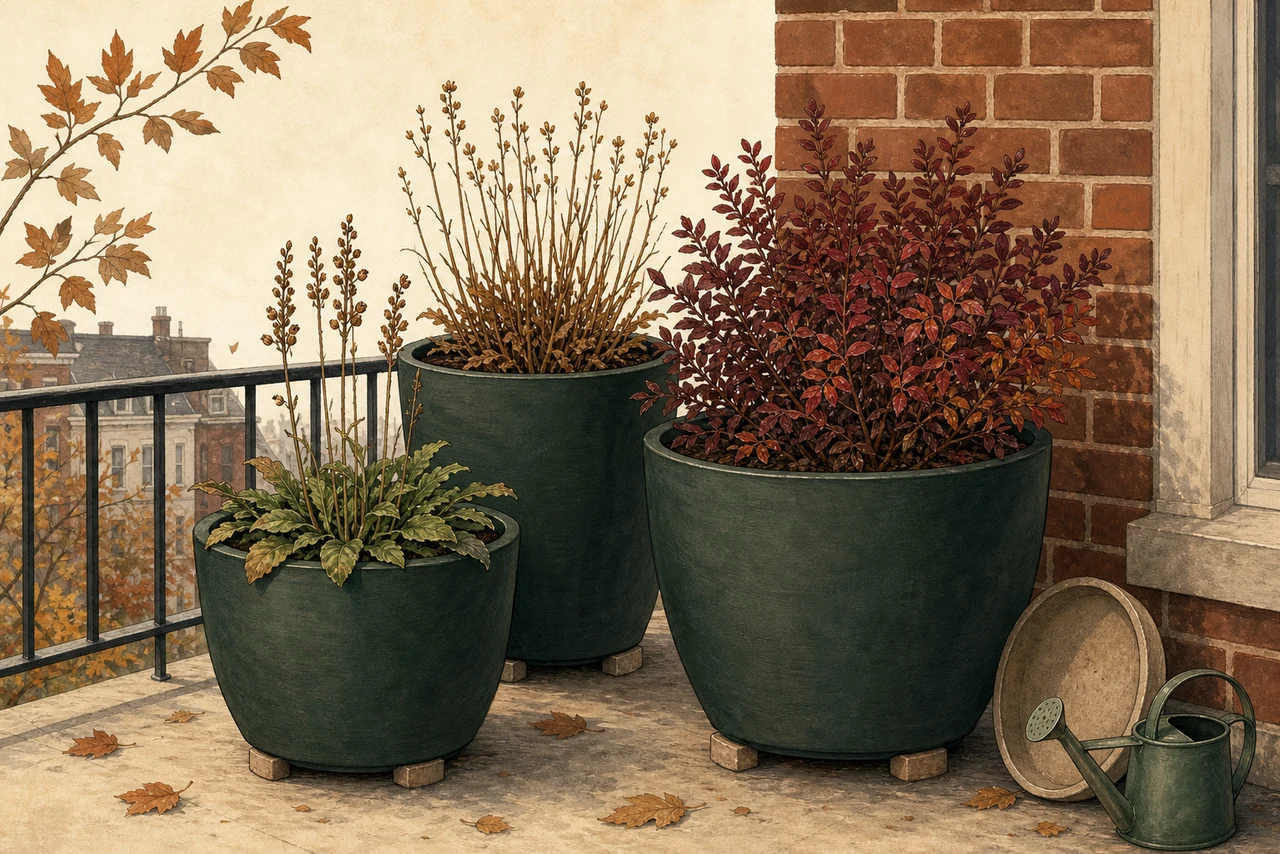
Read a hardiness label as an in-ground starting point
The USDA Plant Hardiness Zone Map describes the average annual extreme minimum temperature for a location. It does not measure wind around a sixth-floor balcony, the temperature inside a pot, the moisture of the mix, or the cold tolerance of a plant's roots. A label that says a perennial is hardy in your zone is therefore useful evidence for an in-ground plant, not a guarantee for exposed roots above ground.
Virginia Tech explains the mechanical difference: once a container freezes through, its temperature can approach the surrounding air, while roots are generally less cold-hardy than shoots. Its rule of thumb for a plant left fully exposed is to choose one rated two USDA zones colder than the local zone. Treat that two-zone margin as a conservative screen. A severe cold snap, a small root volume, poor establishment, wet or dry mix, and repeated freeze-thaw cycles can still change the outcome.
Start with the current USDA map, then use the exact species or cultivar label and a regional source. If the container plant does not meet that buffer—or if its tag is vague—plan a protected winter route rather than inventing certainty from the word native. Native describes ecological origin; it does not make every root system winter-proof in every pot.
Choose the winter route before the pot becomes immovable
There are three practical situations, and each has a different level of exposure. A pot left beside an open railing receives the full combination of wind, winter sun, and ambient cold. A group of containers in a shaded, sheltered corner loses some wind exposure but is still outside. A cold, unheated garage or similar structure can buffer the minimum temperature, provided its actual temperature stays within the range the chosen dormant plant needs.
For a fully exposed outdoor pot, use the hardiness buffer, the largest manageable root volume that fits the plant, and a nonporous container rated for outdoor winters. For a sheltered outdoor group, place pots together out of the strongest wind and winter sun, but keep each drain hole and service path open. Rutgers describes insulating the container area with leaves or another protective material; keep loose material contained, keep the crown and drain openings visible, and do not create a wet sealed package.
Virginia Tech's indoor alternative is a garage or structure that stays cold but above freezing. That is not the same as bringing a dormant native perennial into a heated living room. Check the actual space with a thermometer, protect the pots from vehicle salt or exhaust, and leave access for moisture checks. A detached garage that drops below freezing or warms repeatedly on sunny days should not be assumed safe simply because it has walls.
- Exposed balcony or rooftop: use the most conservative hardiness screen and secure every pot against wind and tipping.
- Sheltered porch or wall: group compatible pots, reduce wind exposure, and preserve drainage and inspection access.
- Cold unheated structure: monitor temperature and moisture; do not treat darkness, warmth, or a closed door as automatic protection.
Make drainage the non-negotiable winter detail
Roots need both water and air. Every standard planter should have adequate holes or slits, and those openings must remain clear after the pot is moved. University of Maryland Extension recommends raising containers on bricks, scrap lumber, or pot feet to keep drainage working. Empty ordinary saucers rather than letting a pot stand in collected water, and keep deicing salt runoff away from the root zone.
Do not add a gravel layer as a winter fix. Both Virginia Tech and UMD explain that stones at the bottom do not improve container drainage; they can leave less usable mix and raise the saturated zone. Use a suitable potting mix through the root volume, cover a large hole only with screen if needed to retain mix, and solve blocked drainage at the opening itself.
Container material also matters. Virginia Tech warns that terra cotta and other porous pots can crack or shatter in freezing conditions. If the plant must remain outside, use a sound fiberglass, plastic, stone, or other nonporous container intended for freeze-thaw exposure. Decorative pottery can be beautiful in summer and still be the wrong winter vessel.
Water by the root zone, not a fixed calendar
Dormancy lowers demand, but it does not eliminate water loss. Wind, low humidity, winter sun, and a roof overhang that intercepts rain can leave a container dry even when the ground nearby is damp. At the other extreme, a blocked hole or full saucer can keep cold roots without enough oxygen. The useful target is adequate moisture with free drainage, not constantly wet mix.
Push a finger or narrow probe below the surface and compare several pots rather than watering because a date arrived. When the mix has partly dried and can accept water, water the root zone thoroughly enough for excess to leave the pot, then empty the saucer. Do not copy the same interval across a small exposed pot, a large sheltered tub, and a container stored in a garage; their drying rates are different.
Rutgers identifies winter media moisture as central to root survival in container nursery stock, while also describing the injury that follows fluctuating conditions. For a home garden, that means recording what you find and responding to the pot in front of you. A long-spout can helps reach the mix without soaking dormant crowns or moving a heavy container each time.
Match the plant, root system, and container as one system
There is no universal minimum gallon size that makes every native perennial safe for winter. Use a pot that accommodates the plant's mature root system and remains stable, drainable, and movable where movement is part of the plan. A container that is merely wider or more decorative does not compensate for a root-bound plant, a shallow profile, or a mismatch between moisture needs and potting mix.
Maryland DNR lists foxglove beardtongue, butterfly weed, and moss phlox among native perennials that grow well in containers, and Virginia sweetspire as a shrub for tubs. Those are candidate uses, not a single recipe. Foxglove beardtongue is the most adaptable of this group for a well-drained perennial pot. Butterfly weed needs a deep, sharply drained home and resents transplanting. Moss phlox belongs at a bright, well-drained edge. Virginia sweetspire needs a large container, more consistent moisture, and enough space for a woody plant's mature size.
Keep plants with similar light and moisture needs together. If one species needs a different winter route, give it its own pot instead of forcing every plant in a mixed container through the same compromise. Confirm local nativity and provenance before purchase; a plant native somewhere in eastern North America is not automatically native to every Mid-Atlantic county.
Prepare in fall, then reopen the container gradually in spring
Enter winter with a healthy, established root system. Rutgers cautions that late high fertility, plant stress, and fluctuating temperatures can reduce cold acclimation. Skip a late push of high-nitrogen fertilizer, avoid unnecessary heavy pruning, clear only diseased material, and secure tall dry stems that could lever the crown in wind. Leave sound structure where it does not create a safety problem.
Keep a short record for each pot: plant name, hardiness rating, winter location, last moisture check, and any cold event. That makes spring diagnosis more useful than guessing. A plant can show root injury only after growth resumes, so a slow start is a reason to inspect the crown, roots, drainage, and recent temperatures—not immediate proof that every dormant stem is dead.
As temperatures moderate, reopen protection in stages. Check drains, remove wet matted insulation from around the pot, and move garage-stored plants back toward light and wind gradually. Watch the forecast for late freezes after a warm spell; Rutgers notes that plants can lose hardiness as they deacclimate. Do not turn one mild weekend into an irreversible spring move.
The working plant palette
These roles are a starting framework. Confirm county-level nativity, provenance, mature width, and nursery availability before purchase.
Maryland DNR includes it among native perennials that grow well in containers. Use a well-drained pot matched to the mature clump, then apply the hardiness and exposure checks in this guide rather than assuming the label guarantees container survival.
DNR lists it for containers, but its deep taproot and sensitivity to wet crowns call for a deep, freely draining pot and minimal later disturbance. It is not a good choice for a shallow bowl or winter-wet mix.
Moss phlox
Phlox subulata
DNR lists moss phlox as a container perennial. Give it bright light and sharp drainage, keep it clear of a saturated saucer, and confirm that the selected plant's range and hardiness fit the site.
DNR identifies it as a native shrub for tubs. Use only where a genuinely large container, reliable moisture, and the plant's mature width can fit; a compact selection still needs its own hardiness check.
A practical sequence
Identify each plant, confirm its hardiness rating and mature root habit, and choose an exposed, sheltered, or cold-structure route.
Check pot material, drainage, stability, root health, and move clearance; group or relocate containers while they are manageable.
Inspect the mix below the surface, water only when needed, empty saucers, and record severe cold or unusual warming.
Watch for blocked drains, freeze-thaw damage, wind looseness, and premature growth without forcing new shoots.
Remove protection gradually, restore normal light and watering in stages, and wait for species-appropriate growth before diagnosing loss.
- Virginia Tech's two-zone buffer is a rule of thumb for screening exposed containers, not a guarantee of survival.
- A hardiness zone is based on average annual extreme minimum temperature; it does not measure a balcony's wind, sun, pot temperature, or root condition.
- Do not use one fixed winter watering schedule for every pot. Check the mix, keep drainage open, and avoid both prolonged saturation and complete drying.
- Confirm the load capacity, wind safety, railing clearance, exit route, and local building rules before grouping or moving large containers on a balcony or deck.
- A garage is useful only when its real temperatures and conditions fit the dormant plant; heated rooms, exhaust, salt, pests, and repeated warm-cold swings add different risks.
- Container suitability does not replace county-level native-range, provenance, mature-size, and species-specific care checks.
Continue planning
- Filter container candidates by light and moisture: Use the Plant Finder for the growing-season site, then add the separate winter hardiness and exposure screen from this guide.
- Borrow roles from the Sunny Postage Stamp plan: Translate its repeated structure and seasonal sequence into separate pots without copying its in-ground quantities or spacing.
- Check foxglove beardtongue's site fit: Use the plant detail as a starting point, then confirm the selected plant's tag, source, root room, and winter route.
- Review butterfly weed before choosing a deep pot: Its sunny, well-drained habit and taproot make container depth and long-term placement part of the design.
- Reserve a genuinely large tub for Virginia sweetspire: Check mature size and moisture before treating this woody shrub as a compact balcony plant.
- Separate planting time from winter container care: Use the plug guide for installation timing and this guide for roots that will remain above ground through winter.
- Measure the container's growing-season light: Record direct sun after leaf-out, while remembering that winter wind and sun create a separate exposure question.
- Virginia Tech Extension — Container and Raised-Bed Gardening ↗
- Rutgers NJAES — Management of Container Nursery Plant Material During Cold Weather ↗
- Rutgers NJAES — Outdoor Container Gardening with Flowering and Foliage Plants ↗
- University of Maryland Extension — Growing Vegetables in Containers and Salad Tables ↗
- USDA — 2023 Plant Hardiness Zone Map ↗
- USDA — How the Plant Hardiness Zone Map Was Created ↗
- Maryland DNR — Wild-scaping Porches, Decks and Balconies ↗
- NC State Extension — Foxglove Beardtongue ↗
- NC State Extension — Butterfly Weed ↗
- NC State Extension — Virginia Sweetspire ↗
Plant ranges and recommendations change as records improve. Read how we separate range, site fit, and design judgment in our sources and methodology.